Bolter

The nice thing about criticizing Andrew is that you can take a leaf out of his own playbook – Don’t bother to actually read anything he has written to make a reasoned analysis, just build that straw-man high based on preconceived notions.

It’s Monday so I’m going to take some warm-up swings on fellow blogger and easy target, one Andrew Bolt. For those of you who do not wish to acknowledge his existence, skip ahead a few paragraphs and I promise I’ll get to a constructive idea eventually.

I first encountered Andrew Bolt (in print) in the high school library, getting lost on my way to the daily comics. He was usually wedged in there between the crank letters and the crossword. If you think that the deplorable behavior we see on social media came about due to the internet, I draw your attention to 50/50 in the Herald Sun circa 1999. 50/50 was ‘letters to the editor’ for people too angry or incapable of constructing more than once sentence on their pet peeve to justify a ‘letter to the editor’. Now we have Twitter.

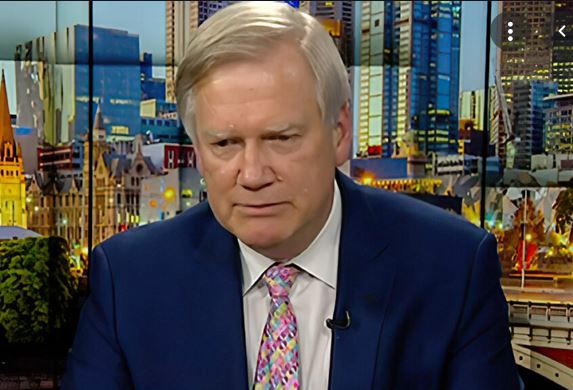
If you enjoy some skewering of Andrew Bolt you can’t go past this article here. Enjoy it as a main course and the below will be a small shared dessert. The nice thing about criticizing Andrew is that you can take a leaf out of his own playbook – Don’t bother to actually read anything he has written to make a reasoned analysis, just build that straw-man high based on preconceived notions. On that basis, here’s the rub on Andrew: He sees himself as smarter than the ‘intellectual elite’ and academics, but also yearns for their acceptance as a peer and equal.

The consistent derision from individuals that Andrew see’s as intellectually inferior has taken him to the point where all of his opinions are formed by taking a contrarian view to the people who hate him. Combine these opinions with the a pinch of showmanship and a loud dog-whistle and you have ‘Australia’s most read’ column. But it also leaves you with a massive blind spot. Even broken clocks are right twice a day, and basing your opinions on other peoples opinions will hurt you in the end.

Now the cost of being wrong for Andrew isn’t particularly high. He’ll simply find another set of car tyres to yap at. But for politicians or business people the cost is much higher. I couldn’t close this piece without touching on Andrew’s political equal in this regard, one Tony Abbott. Call it a nice sherry.

Many of us tend to see the world through a certain lens. We may also have a core competency that carry’s us to success. The ‘Scotty from Marketing’ tag fits so well because all evidence suggests that ScoMo doesn’t wake up in the morning and think ‘how do I make the country better’. Instead, ‘How do I make people think I’m making the country better’. It’s much easier to simply associate yourself with the good and run away from the bad than actually get things done. Tony’s tag was always ‘the pugilist’. Again, the shoe fit – Tony was fantastic in opposition because he took great joy in picking holes, a jab here a poke there until all defense was broken down.

That relentlessness sparring took him all the way to the lodge, but he didn’t know what to do when he got there. Never has a Prime-Minister talked so much about the opposition until he lost the job. Anyone who was surprised by the incapability to pivot hadn’t been paying attention. Tony was always far more hungry for the conflict than for resolving the issues at hand, And like Andrew – was far more motivated by what other people thought than by his own opinions.

If you are even partway through your career, the bad news is that your lens is likely well crafted by now, and is as likely to be both your core competence and Achilles heel by the time you are done. But if you can, don’t be an Andrew, don’t be a Tony. Don’t make your decisions based off other peoples opinions, and don’t set your course in order to piss them off.


Incremental Gain

The difference between going uphill at 6 minutes per kilometer vs 7 minutes per kilometer (roughly 15% faster) requires 25% more energy. What do you pay for incremental gain in your life

On the weekend I went for a trail run, I ran up the notorious local climb which I recently blogged about here. Typically running is considered a ‘closed skill’ sport, meaning that there are far less variables than most sports. Unlike football or basketball (Open Skill) where tactics, teamwork, preparation and environment all contribute to the outcome, competitive running almost always comes down to who is fittest on the day. Your ability to produce power whilst processing lactic acid is the ballgame, and while tactics and equipment play their part, it is very rare for the 8th fastest person coming into the race to beat their PB by 35 seconds to win the race.

Back to my Sunday afternoon, I decided to climb this hill/mountain slower than I normally would, and as I was going up, I started to think about incremental effort vs incremental gain. The effort that I was putting in was far less than normal, but my speed was only marginally less. Trail running is a bit more interesting than track running, more in common with cycling (think Tour de France). The difference in terrain makes it a more open skill sport, with strategic decisions to be made about how you spend your energy.

For example, the extra effort to go up hill faster vs the gain in speed is quite large. The difference between going uphill at 6 minutes per kilometer vs 7 minutes per kilometer (roughly 15% faster) might require 25% more energy, on the other hand, going downhill faster requires comparatively little extra energy as you are simply using your momentum. It does however require extra concentration and you take on extra risk if you were to have an accident. Like the Tour de France, going uphill tends to separate the wheat from the chaff as the fitness doesn’t lie, you can’t simply take extra risk and go faster.

So far everything I’ve discussed likely seems very specific to aerobic sporting activity, however this concept is as relevant to other areas of our daily life. In anything we are trying to achieve, there is a both a benefit and a cost to increased performance and when making decisions it is important to evaluate the equation. When starting an activity, the benefit of some extra effort will likely far outweigh the cost. Two hours study for a test vs one hour will likely net you a much better result of the test. As you go on, the benefit of extra effort almost always diminishes. Spending 30 hours to study for the test might net you 95% which will put you top of the class, but it may require an extra 30 hours of study to get to 100%.

There are two factors key at play. Firstly, the time required to become the absolute best at anything is typically very long. Secondly, there is typically a cap on what can be achieved and once you reach a certain point, more effort will net 0% gain. Take for example sailing, when going downwind, the air-stream fills the sail and pushes the boat forward. If the boat goes too fast, the amount of wind that the sail physically runs into is enough to collapse the sail and stop the boat. In business, when working with others, you might get to a point where you cannot get your colleagues to work any faster, and sending them yet another email might cause them to go slower out of spite!

Conversely, most endeavors will have opportunities where the extra incremental effort required can net you substantial gains. In David Allen’s ‘Getting things Done’ he quotes world class rower Craig Lambert who talking about a child on a swing. The momentum comes from the swing itself, the small pump of the legs is a comparatively small contributor of power, but it keeps you swinging. If you try to force it, you disrupt the momentum.

Final thoughts:

  1. Professional athletes or those wishing to compete at the highest level in their field are very often the ones willing to pay any cost no matter how small the incremental gain. If you want to greatly exceed your peers, assume it comes at a cost that most aren’t willing to pay.
  2. If you want to settle for ‘very good’ while making it look effortless, identify where you can get the greatest gain at smallest cost. Efficiency is greatly under-rated and under-recommended compared to effort.
  3. If it isn’t costing you extra energy, are you taking on extra risk?
  4. Many people obsess over the tangential elements of success. If you are not elite in your field, a good nights sleep or the right shoes won’t win you the race. If you are elite, they likely won’t win it for you either, but they could lose it for you. The only time the best runner loses the race is if they let something else de-rail their day.

Totally normal human beings

Albo must have been reading the blog, i see he has turned up in Sydney channeling his inner Hawkie to scull a beer.

Albo must have been reading the blog, i see he has turned up in Sydney channeling his inner Hawkie to scull a beer.

Sorry for giving oxygen to Sky News but Gilbert is the least worst.

Fair effort, no question – particularly with the cameras on him. Classic that the beer itself is both named after Albo and a Corn Ale. Hard to gauge how this plays in the electorate but I’m willing to bet Scotty would drink Tooheys so nil all draw?

Kind of awkward that the bartender just walks off on him at the start. Less a bloke really enjoying himself with a crowd and more someone in desperate need of that first livener. I can’t go further without showing the master at work:

Funny thing about Bob in this one, its like he doesn’t quite hear what is being asked of him, then he sees the beer and the eyes just lock in. Almost as if he spots a beer and is compelled to just grab it. Great stuff.

My last post started with the idea that the federal Labor Party are in this perpetual loop of waiting to see if the Liberal Party would fuck things up enough to win power. I quickly decided that this was unfair framing and it wasn’t a party issue, more of a dominant personality thing tied to what people want in a leader. Scott over Bill, Malcolm over Bill, Tony over Kevin/Julia. Howard over Kim (twice!) Go back far enough and it was Hawke and Keating so nothing to do with party, just competing forces at a point in time.

I still can’t quite figure Albo out. This is a guy, conceived on a cruise ship, public housing, an actual Rugby League enthusiast, hard Left of the Left. And yet spent half his maiden speech to parliament banging on about an airport runway. I’m not kidding. Seems like it was a big deal at the time.

Cheap shots aside, it is wild to me that the leader of the Labor Party can be Republic supporting, euthanasia favoring, Mard-Gras attending, pro boat arrival, carbon pricing, renewable energy guy and the Libs seem barely motivated to run up their most lazy scare campaign. They just don’t seem scared by him. Granted we are still a few months away from an election and they have been very busy tripping over their own Dicks, but still. This guy simultaneously has Bob Brown AND Malcolm Turnbulls ideology but only manages to convey 100% Camry driving senior citizen / wet blanket. How is this man only 58? (Cheap shorts were not put aside).

I’m not up with the news, but I can think of four possibilities:

  1. Age has tempered the man and he is really as boring as he looks.
  2. There actually is a WILD MAN stuck in there
  3. Party strategy is small target. Be bland as you can be and hope they hate the other blokes (and I say blokfollow the twitter for post updateses) more. I get it.
  4. He is actually doing/saying a lot of cool shit and can’t get airtime.

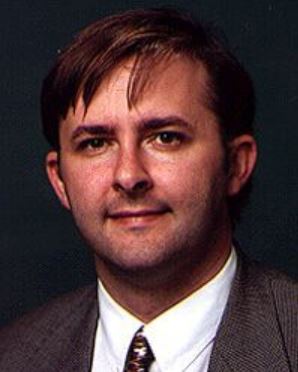
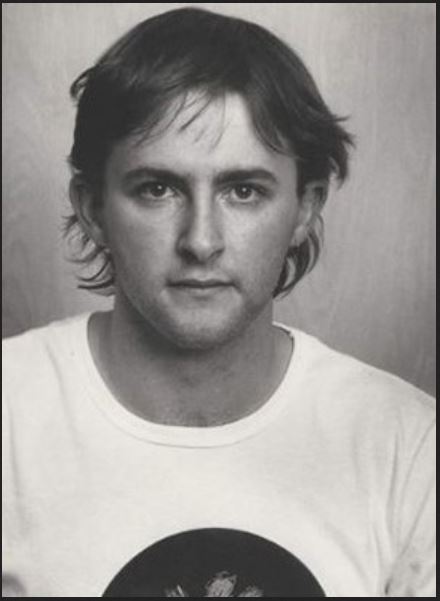
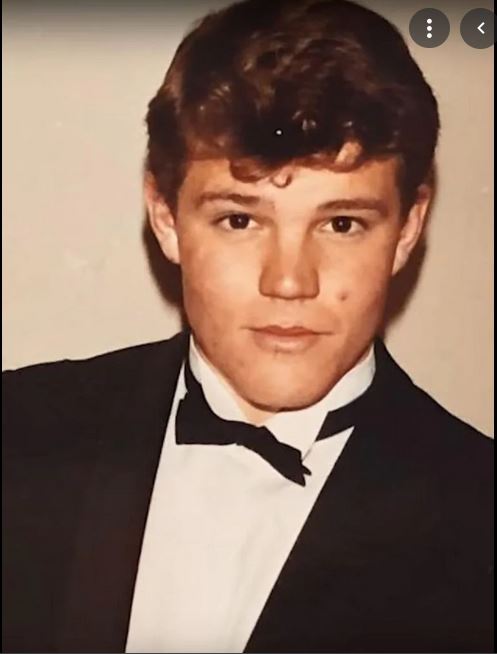
If its the first, I’m sad. I would have loved an election between these two blokes:

Twitter for latest posts

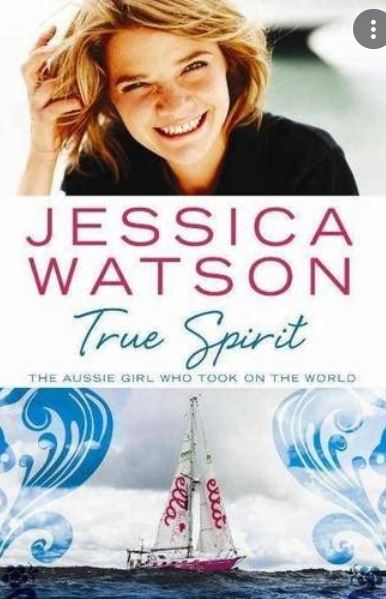
Book – True Spirit

Jessica Watson was a 16 year old Girl from Mooloolaba, who left Sydney harbor in a 34 foot yacht on 18 October 2009 and returned 15 May 2010, completing a solo non-stop unassisted circumnavigation of the globe. Obviously this is fucking nuts.

Jessica Watson was a 16 year old Girl from Mooloolaba, who left Sydney harbor in a 34 foot yacht on 18 October 2009 and returned 15 May 2010, completing a solo non-stop unassisted circumnavigation of the globe. Obviously this is fucking nuts.

I’ve done a very small amount of ocean sailing in my time, but I have found my time on the water very profound to the point where I could write at least 50 posts on sailing. I won’t indulge that urge today, except to say that like many other pursuits in life, sailing isn’t really about sailing the boat. You can teach someone to trim a sail in an afternoon. Putting your life in the hands of 10 meters of fiberglass and steel which is under constant tension from the forces around it or having your progress dictated by the whims of the wind and the waves are far more challenging than the technical skills required. This book really captures and communicates this from Jessica’s perspective so its well worth your time.

My two other key takeouts:

During a test run sailing from Brisbane to Sydney, on her first night after leaving Brisbane, Ella’s Pink Lady collided with the Silver Yang, a 63,000-tonne bulk-carrier at 02.00 am. Watson’s boat was dis-masted in the collision. She was able to retain control and return the boat to Southport under motor (Wikipedia). Jessica says that hitting that ship ended up being a really positive thing, as she knew she was ready to deal with other inevitable challenges she would face on the circumnavigation. At the time it happened I was probably one of those people who said ‘egh maybe this trip isn’t for you’, but reading about the 4 years of work that went into getting to that point, and how she handled the failure, it made me understand why it didn’t stop her from continuing her attempt.

Jessica single-handedly chased this dream from the age of 12, for 4 years until she set sail at 16 years old. As with so many things, the intense focus when the going gets boring is the key to achieving a goal. This may be controversial, but most people when faced with a southern ocean storm will grit their teeth and hang on. But very few of us, let alone a 14 year old teenage girl will invest every waking moment into studying diesel engine mechanics or best rigging setups for short handed sailing. The knowledge that Jessica had to acquire to complete this task is astounding, let alone to absorb it when the world is pushing you in 1,000 other directions is truly remarkable.

Give me your best 40 hours

The company almost pays for your time. The system has thrived by not stopping you if you go over. If you are in a business that praises you but does not reward you for extra effort, that’s on you.

I was pretty harsh on Cal Newport in a recent post (and rightly so). I do however generally agree with him that our workday is largely taken up with meaningless or at best, inefficient activity.

I’m having a big week at work this week, and I can feel how much energy I’ve spent between Monday morning and now (Thursday afternoon). Not all of this energy has been productive though, and I was just lamenting that if a had disappeared into ether over the weekends our projects would have been more or less where they are today. Meetings would have happened without me, Purchase orders would have been approved. Maybe things wouldn’t have been as smooth, but someone would have picked up the slack.

Until recently, the best indication of productivity was time spent at the desk. We came to work at a set time and finished when everyone else did. Thanks to advances in technology we can now effectively fill every waking moment with activity if we so choose. A common challenge for me when managing people is that they get sucked down the rabbit hole, completing task after task until they are burnt out. They may be picking up the slack for a absent colleague (ethered or otherwise) or trying to get ahead. I generally provide council around the following principle: ‘What is the best 40 hours a week you can give the company’.

One might assume if they take my advice the company, project or their peers will suffer as the load just gets transferred, however this is rarely the case. In fact usually the opposite happens, as the focus on quality over quantity increases overall efficiency. The basis for this advice is the following:

  1. The company almost pays for your time. The system has thrived by not stopping you if you go over. If you are in a business that praises you but does not reward you for extra effort, that’s on you
  2. The more you work, the less efficient you are. Hours 55-60 probably aren’t netting you as much as you think.
  3. By striving for the best 40 you can do, you should still get done the things that make you good at your job. Rewards will follow. You’ll find some tasks that someone may be able to do much faster than you or a meeting you can cancel.
  4. As a good friend of mine once said ‘people at 110% capacity bitch about it, people at 130% capacity innovate’. Put some energy into creating a template or writing a script to do that repetitive task, better yet, get someone else to help you with that. You might do 70 hours that week, but it will help you get to 40.
  5. You likely signed a contract for 40 hours. You have made an initial commitment to the job (psychological contract). If you are giving more, you’ll likely resent it and do a worse job overall. If you have a boss who doesn’t mind if you hate your job, you should find a new boss.

This might seem specific to employees in large companies, but the same principle can be applied to the small business owner or the freelance creative. Determine how much time you are willing to commit first, then determine how best to spend it. If you find yourself spending more, how much quality are you getting for that quantity?

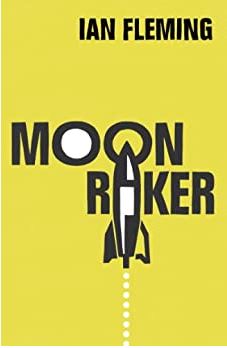
Book – Moonraker

My action Library runs from the top shelf (Le Carre) all the way to the bottom (looking at you Cussler, Gérard de Villiers) and I was surprised that Fleming has far more in common Le Carre than I imagined.

There is a fantastic Youtube video where a proud mother interrupts a Michael Buble concert to insist that her son is a fantastic singer. Buble gets the kid on stage and the rest is history:

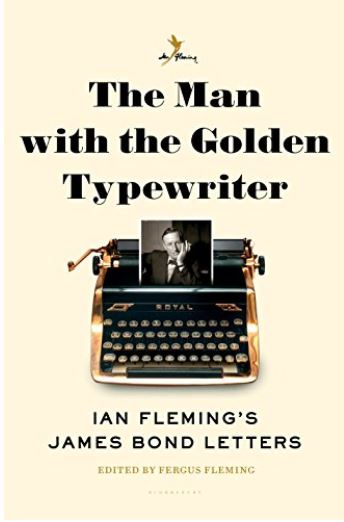
I recently read ‘The Man with the Golden Typewriter’. Ian Fleming, author of James Bond was a prolific writer. He wrote constantly, to his wife, publisher, editors, fans, friends and critics. The bulk of the book is his letters, interwoven with responses and context of Fleming’s journey as an author.

It’s a fantastic read. He was a fascinating man, obsessed with details, known for driving his traveling companions wild by taking thirty minutes to explain his martini order to every barman he met. I was a huge James Bond fan as a kid, as the Tux always spoke to me more than a superhero suit; and I also read a lot of action books but I’d never made it to Fleming. As an adult I read Casino Royale (the first book) and The Man with the Golden Gun (the last) and very much enjoyed both, and surprised by the quality of the writing. Golden Typewriter spurred me to read them all in order.

I read Casino Royale (Again) then Live and let die, thoroughly enjoying both, then I came to Moonraker.

“A mile ahead the great eyes of the Mercedes hooded themselves as they went over the crest of Wrotham Hill and disappeared down into the moonlit panorama of the Weald of Kent”

By the time I was eighty pages in, I was channeling my inner Buble, ‘HOLY SHITBALLS IAN, YOU CAN REALLY WRITE’.

“Each dark conjecture came and for a moment settled like a vulture on Bond’s shoulder and croaked into his ear that he had been a blind fool.”

This shouldn’t have come as a huge shock given the popularity of the books when they were published, but tend to think of Fleming as the instigator of the Bond behemoth rather than an amazing author in his own right. Also, based on the movies, it is easy to assume that the books may be cheesy or too fantastic. Not so!

“His headache was still sitting over his right eye as if it had been nailed there.”

My action Library runs from the top shelf (Le Carre) all the way to the bottom (looking at you Cussler, Gérard de Villiers) and I was surprised that Fleming has far more in common Le Carre than I imagined. The first 80 pages of Moonraker contains an office meeting and a game of Bridge. I don’t know how to play Bridge, but as the scene came to its climax I could literally feel my pulse in my neck. For me the mark of a truly great writer is the make the boring or the obvious extraordinary and Fleming did that for me with Moonraker.

The bloke next door

I’m starting to think being a daggy bloke pretending to be a ‘cool dude’ is actually a pretty relatable thing to do.

(For the time being) I’ve stopped reading the news sites, I’m off twitter, I don’t watch TV or listen to the radio. There are numerous good reasons for this, but all I’ll say for now is that I don’t think being well informed makes me happier or more constructive.

My almost exclusive source of news is the Betoota Advocate, a satirical news instagram account / Beer marketing strategy. This is surprisingly effective for staying up on world events. I managed to know about the resurgence of the Taliban, who won the Grand Final and that NSW had a new premier all without having to find out what 500 talking heads THOUGHT about it.

Reading Betoota today I see there is a new Quarterly Essay out on a topic I think about a lot:

I’m keen to read this one, and I’ll blog my comments if i do. I’ve read many political books and essays over the years on why elections are won and lost, and I’m getting more convinced it’s less to do with policy and more to do with which leader the voters can most identify with. I love me some George Megalogenis, Electorate Demographics and all that, but I worry that the electorate gets too much credit for rational thought, and that it really comes down to who best taps into our psyche. Recent results in WA, QLD and VIC state elections suggests we’re very supportive of whomever best embraces our collective identity at that precise point in time.

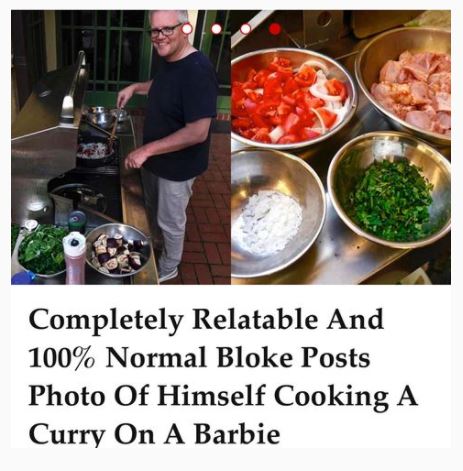
Take Scott Morrison for example. Here is a bloke who 1) grew up in the Eastern Suburbs playing Rugby 2) Only real jobs were running Tourism Australia and the state director of the NSW Liberal Party (I don’t count child actor as a job) and 3) only started following his football team when he ran for his current electorate. Your average Aussie bloke he ain’t. But dammed if he doesn’t Cosplay hard as the most vanilla uncle you ever met at a family BBQ.

Now typically most people can see through the ‘knocking up a chook shed’ shtick. But I’m starting to think that being a daggy bloke dressing up as a truck driver or a farmer like you’d rather have that job is actually a pretty relatable thing to do. Maybe Australians identify with that? What is more Australian than falling into a job you are unqualified for, pretending to cook dinner or posing for cheesy shit photos with a beer in hand.

follow the twitter for post updates

Book: Deep Work – Cal Newport

Helpful book, very frustrating read. Many many times I wanted to throw this book across the room. So often with the genre you find a great concept that could fit nicely in an article has been stretched out to a book (or even a career).

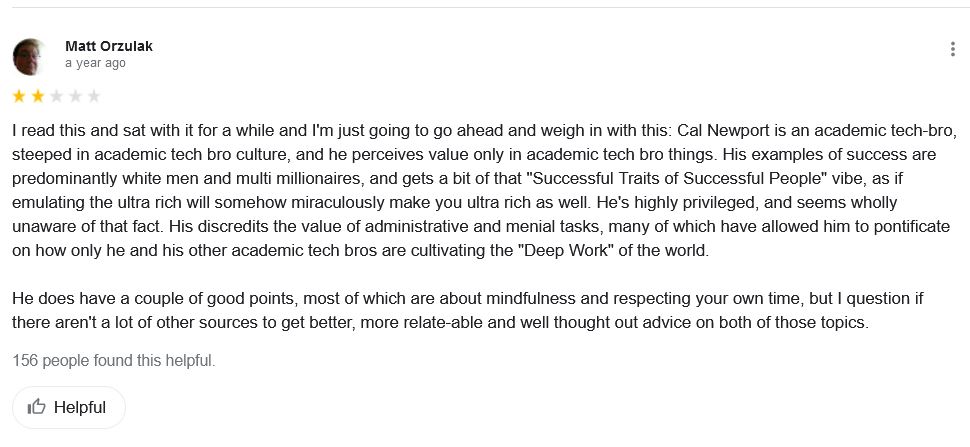
I’m not going to waste too much time skewering the guy, thankfully these two people have already done it so perfectly.

Mara Lucien – Book review: Deep Work by Cal Newport

Some guy on google reviews – don’t know who he is, but he doesn’t miss:

Woof. I’m reminded of Nassim Taleb’s view of academics which is, to paraphrase: ‘Its a giant circle jerk where value is derived by getting referenced by other academics’.

ANYWAY – here is the shocking part. After reading this book I started to schedule Deep Work periods in my day, starting with 45mins to 1 hour. I kept alist of items i wanted to work on and I’m finding it a really effective means of getting things done. I combine with an Atomic Habits approach of ‘Cue/Craving/Response/Reward’ to give myself both reminders and rewards for deep work sessions and I’m definitely getting more done.

Four Rules for Deep Work to remember:

1 – Work Deeply.

  • Montastic Work – remove yourself from the world
  • Bimodal Work – Divide year up into periods
  • Rythmic Work – Regular Work every day
  • Journalistic Work – Grab hours and minutes where you can

Build a ritual:

  • Where you’ll work and for how long (eliminating interruptions)
  • How you’ll work once you start
  • How you’ll support your ability to do work e.g. food/drink/bathroom

The 4 disciplines of execution, per Clayton Christensen, are:
– Focus on the wildly important. “Say ‘yes’ to the subject that arouses a terrifying longing, and let the terrifying longing crowd out everything else.” — David Brooks, The Art of Focus
– Act on lead measures.
– Keep a compelling scoreboard. e.g. “deep work” hours tracked
-Create a cadence for accountability.

Regarding downtime, Newport says:
– Downtime aids insights.
– Downtime helps recharge the energy needed to work deeply.
– The work that evening downtime replaces is usually not that important.

2 – Embrace Boredom, Create blocks where you can veg out.

3 – Quit Social Media – I’m already there my man.

4 – Drain the shallows

  • Schedule every minute of your day.
  • Quantify the depth of every activity.
  • Set (or ask your boss to set) a shallow work budget
  • Finish your work by 5:30 or some other set time – use a shutdown ritual
  • Become hard to reach – use a scarcity mindset when it comes to your time.

Power is inevitable

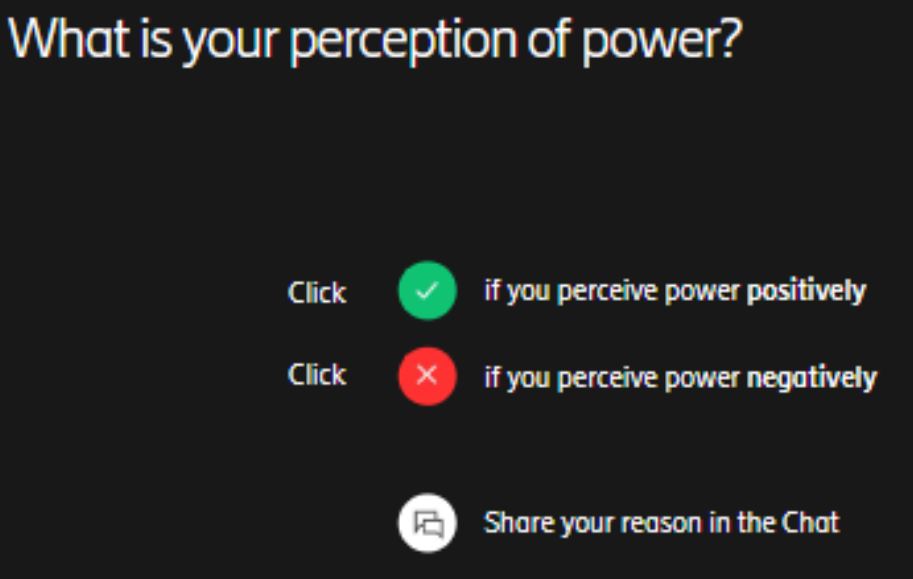
Do you perceive power positively or negatively.

I recently did some leadership training at work. We were presented with the following:

Despite considering the question, I wasn’t compelled to click on either option. When questioned on why I hadn’t responded, I answered that for me it can can be either depending on the form of power. I also added ‘Power is inevitable’. Now the facilitator really liked this and embarrassingly latched onto it for the rest of the session.

To be clear, the context is power in the political sense. ‘Control’ or ‘Influence’ could be used, but ‘Power’ sounds much more sexy. For most of us, power in the workplace is inevitable. Customers, Clients, Managers, Suppliers, Experts you name it. Every entity is exercising some form of power, therefor i didn’t see the framing particularly helpful.

Instead, when considering Power, I offer the following metaphor. Think about the Ocean. Many forms of power at play: moon, tides, weather systems, continents, reefs and marine life all exert force on the water, which in turn transfers that force itself, creating a perpetual loop of power.

Movement of the ocean is inevitable. Despite how it may feel sometimes, how you interact with the Ocean is up to you. you might paddle in the shallows on a nice day. You might dive under the surface and be oblivious of the weather. You can be continually belted by the surf until you are exhausted. You may perceive the Ocean as good or bad depending on your situation (fine) but it won’t change the tides.