Book – True Spirit

Jessica Watson was a 16 year old Girl from Mooloolaba, who left Sydney harbor in a 34 foot yacht on 18 October 2009 and returned 15 May 2010, completing a solo non-stop unassisted circumnavigation of the globe. Obviously this is fucking nuts.
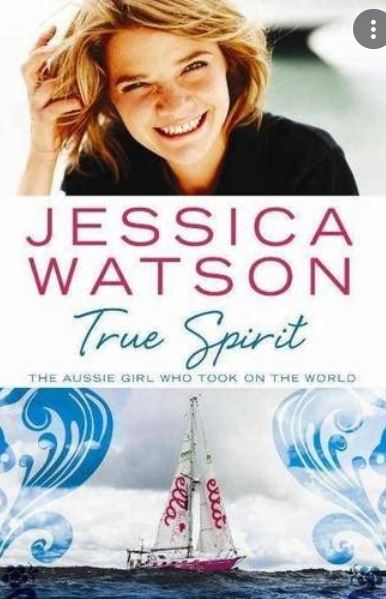
Jessica Watson was a 16 year old Girl from Mooloolaba, who left Sydney harbor in a 34 foot yacht on 18 October 2009 and returned 15 May 2010, completing a solo non-stop unassisted circumnavigation of the globe. Obviously this is fucking nuts.

I’ve done a very small amount of ocean sailing in my time, but I have found my time on the water very profound to the point where I could write at least 50 posts on sailing. I won’t indulge that urge today, except to say that like many other pursuits in life, sailing isn’t really about sailing the boat. You can teach someone to trim a sail in an afternoon. Putting your life in the hands of 10 meters of fiberglass and steel which is under constant tension from the forces around it or having your progress dictated by the whims of the wind and the waves are far more challenging than the technical skills required. This book really captures and communicates this from Jessica’s perspective so its well worth your time.

My two other key takeouts:

During a test run sailing from Brisbane to Sydney, on her first night after leaving Brisbane, Ella’s Pink Lady collided with the Silver Yang, a 63,000-tonne bulk-carrier at 02.00 am. Watson’s boat was dis-masted in the collision. She was able to retain control and return the boat to Southport under motor (Wikipedia). Jessica says that hitting that ship ended up being a really positive thing, as she knew she was ready to deal with other inevitable challenges she would face on the circumnavigation. At the time it happened I was probably one of those people who said ‘egh maybe this trip isn’t for you’, but reading about the 4 years of work that went into getting to that point, and how she handled the failure, it made me understand why it didn’t stop her from continuing her attempt.

Jessica single-handedly chased this dream from the age of 12, for 4 years until she set sail at 16 years old. As with so many things, the intense focus when the going gets boring is the key to achieving a goal. This may be controversial, but most people when faced with a southern ocean storm will grit their teeth and hang on. But very few of us, let alone a 14 year old teenage girl will invest every waking moment into studying diesel engine mechanics or best rigging setups for short handed sailing. The knowledge that Jessica had to acquire to complete this task is astounding, let alone to absorb it when the world is pushing you in 1,000 other directions is truly remarkable.
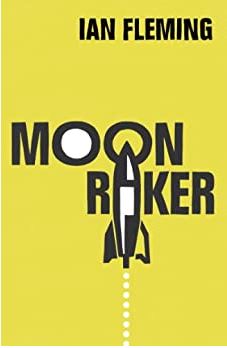
Book – Moonraker

My action Library runs from the top shelf (Le Carre) all the way to the bottom (looking at you Cussler, Gérard de Villiers) and I was surprised that Fleming has far more in common Le Carre than I imagined.

There is a fantastic Youtube video where a proud mother interrupts a Michael Buble concert to insist that her son is a fantastic singer. Buble gets the kid on stage and the rest is history:

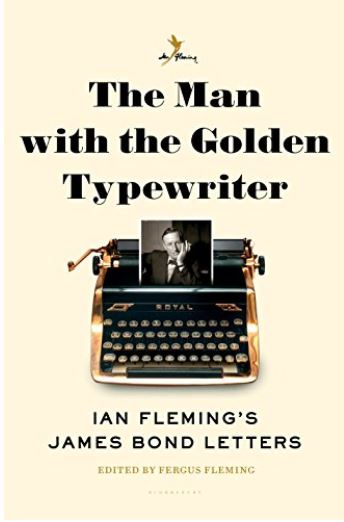
I recently read ‘The Man with the Golden Typewriter’. Ian Fleming, author of James Bond was a prolific writer. He wrote constantly, to his wife, publisher, editors, fans, friends and critics. The bulk of the book is his letters, interwoven with responses and context of Fleming’s journey as an author.

It’s a fantastic read. He was a fascinating man, obsessed with details, known for driving his traveling companions wild by taking thirty minutes to explain his martini order to every barman he met. I was a huge James Bond fan as a kid, as the Tux always spoke to me more than a superhero suit; and I also read a lot of action books but I’d never made it to Fleming. As an adult I read Casino Royale (the first book) and The Man with the Golden Gun (the last) and very much enjoyed both, and surprised by the quality of the writing. Golden Typewriter spurred me to read them all in order.

I read Casino Royale (Again) then Live and let die, thoroughly enjoying both, then I came to Moonraker.

“A mile ahead the great eyes of the Mercedes hooded themselves as they went over the crest of Wrotham Hill and disappeared down into the moonlit panorama of the Weald of Kent”

By the time I was eighty pages in, I was channeling my inner Buble, ‘HOLY SHITBALLS IAN, YOU CAN REALLY WRITE’.

“Each dark conjecture came and for a moment settled like a vulture on Bond’s shoulder and croaked into his ear that he had been a blind fool.”

This shouldn’t have come as a huge shock given the popularity of the books when they were published, but tend to think of Fleming as the instigator of the Bond behemoth rather than an amazing author in his own right. Also, based on the movies, it is easy to assume that the books may be cheesy or too fantastic. Not so!

“His headache was still sitting over his right eye as if it had been nailed there.”

My action Library runs from the top shelf (Le Carre) all the way to the bottom (looking at you Cussler, Gérard de Villiers) and I was surprised that Fleming has far more in common Le Carre than I imagined. The first 80 pages of Moonraker contains an office meeting and a game of Bridge. I don’t know how to play Bridge, but as the scene came to its climax I could literally feel my pulse in my neck. For me the mark of a truly great writer is the make the boring or the obvious extraordinary and Fleming did that for me with Moonraker.

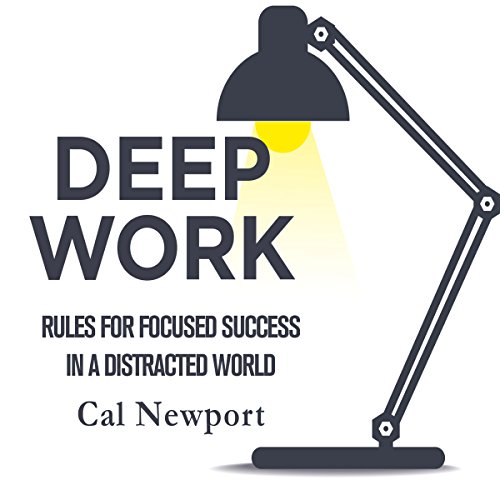
Book: Deep Work – Cal Newport

Helpful book, very frustrating read. Many many times I wanted to throw this book across the room. So often with the genre you find a great concept that could fit nicely in an article has been stretched out to a book (or even a career).

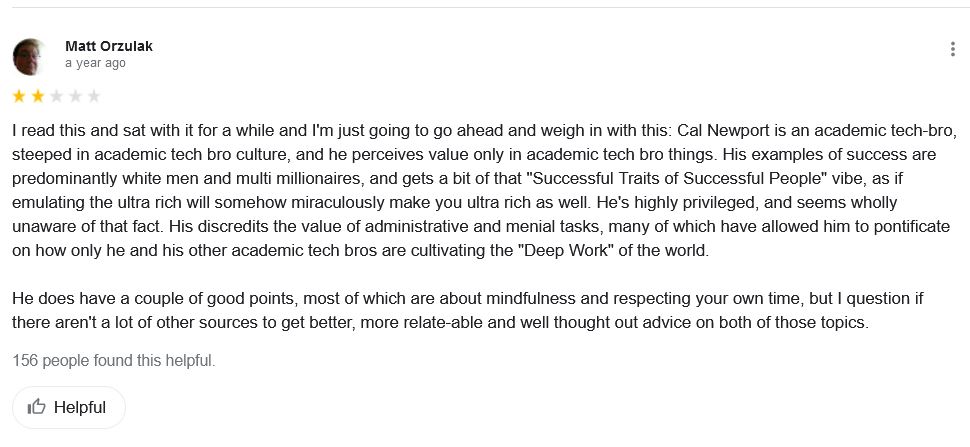
I’m not going to waste too much time skewering the guy, thankfully these two people have already done it so perfectly.

Mara Lucien – Book review: Deep Work by Cal Newport

Some guy on google reviews – don’t know who he is, but he doesn’t miss:

Woof. I’m reminded of Nassim Taleb’s view of academics which is, to paraphrase: ‘Its a giant circle jerk where value is derived by getting referenced by other academics’.

ANYWAY – here is the shocking part. After reading this book I started to schedule Deep Work periods in my day, starting with 45mins to 1 hour. I kept alist of items i wanted to work on and I’m finding it a really effective means of getting things done. I combine with an Atomic Habits approach of ‘Cue/Craving/Response/Reward’ to give myself both reminders and rewards for deep work sessions and I’m definitely getting more done.

Four Rules for Deep Work to remember:

1 – Work Deeply.

  • Montastic Work – remove yourself from the world
  • Bimodal Work – Divide year up into periods
  • Rythmic Work – Regular Work every day
  • Journalistic Work – Grab hours and minutes where you can

Build a ritual:

  • Where you’ll work and for how long (eliminating interruptions)
  • How you’ll work once you start
  • How you’ll support your ability to do work e.g. food/drink/bathroom

The 4 disciplines of execution, per Clayton Christensen, are:
– Focus on the wildly important. “Say ‘yes’ to the subject that arouses a terrifying longing, and let the terrifying longing crowd out everything else.” — David Brooks, The Art of Focus
– Act on lead measures.
– Keep a compelling scoreboard. e.g. “deep work” hours tracked
-Create a cadence for accountability.

Regarding downtime, Newport says:
– Downtime aids insights.
– Downtime helps recharge the energy needed to work deeply.
– The work that evening downtime replaces is usually not that important.

2 – Embrace Boredom, Create blocks where you can veg out.

3 – Quit Social Media – I’m already there my man.

4 – Drain the shallows

  • Schedule every minute of your day.
  • Quantify the depth of every activity.
  • Set (or ask your boss to set) a shallow work budget
  • Finish your work by 5:30 or some other set time – use a shutdown ritual
  • Become hard to reach – use a scarcity mindset when it comes to your time.