Incremental Gain

The difference between going uphill at 6 minutes per kilometer vs 7 minutes per kilometer (roughly 15% faster) requires 25% more energy. What do you pay for incremental gain in your life

On the weekend I went for a trail run, I ran up the notorious local climb which I recently blogged about here. Typically running is considered a ‘closed skill’ sport, meaning that there are far less variables than most sports. Unlike football or basketball (Open Skill) where tactics, teamwork, preparation and environment all contribute to the outcome, competitive running almost always comes down to who is fittest on the day. Your ability to produce power whilst processing lactic acid is the ballgame, and while tactics and equipment play their part, it is very rare for the 8th fastest person coming into the race to beat their PB by 35 seconds to win the race.

Back to my Sunday afternoon, I decided to climb this hill/mountain slower than I normally would, and as I was going up, I started to think about incremental effort vs incremental gain. The effort that I was putting in was far less than normal, but my speed was only marginally less. Trail running is a bit more interesting than track running, more in common with cycling (think Tour de France). The difference in terrain makes it a more open skill sport, with strategic decisions to be made about how you spend your energy.

For example, the extra effort to go up hill faster vs the gain in speed is quite large. The difference between going uphill at 6 minutes per kilometer vs 7 minutes per kilometer (roughly 15% faster) might require 25% more energy, on the other hand, going downhill faster requires comparatively little extra energy as you are simply using your momentum. It does however require extra concentration and you take on extra risk if you were to have an accident. Like the Tour de France, going uphill tends to separate the wheat from the chaff as the fitness doesn’t lie, you can’t simply take extra risk and go faster.

So far everything I’ve discussed likely seems very specific to aerobic sporting activity, however this concept is as relevant to other areas of our daily life. In anything we are trying to achieve, there is a both a benefit and a cost to increased performance and when making decisions it is important to evaluate the equation. When starting an activity, the benefit of some extra effort will likely far outweigh the cost. Two hours study for a test vs one hour will likely net you a much better result of the test. As you go on, the benefit of extra effort almost always diminishes. Spending 30 hours to study for the test might net you 95% which will put you top of the class, but it may require an extra 30 hours of study to get to 100%.

There are two factors key at play. Firstly, the time required to become the absolute best at anything is typically very long. Secondly, there is typically a cap on what can be achieved and once you reach a certain point, more effort will net 0% gain. Take for example sailing, when going downwind, the air-stream fills the sail and pushes the boat forward. If the boat goes too fast, the amount of wind that the sail physically runs into is enough to collapse the sail and stop the boat. In business, when working with others, you might get to a point where you cannot get your colleagues to work any faster, and sending them yet another email might cause them to go slower out of spite!

Conversely, most endeavors will have opportunities where the extra incremental effort required can net you substantial gains. In David Allen’s ‘Getting things Done’ he quotes world class rower Craig Lambert who talking about a child on a swing. The momentum comes from the swing itself, the small pump of the legs is a comparatively small contributor of power, but it keeps you swinging. If you try to force it, you disrupt the momentum.

Final thoughts:

  1. Professional athletes or those wishing to compete at the highest level in their field are very often the ones willing to pay any cost no matter how small the incremental gain. If you want to greatly exceed your peers, assume it comes at a cost that most aren’t willing to pay.
  2. If you want to settle for ‘very good’ while making it look effortless, identify where you can get the greatest gain at smallest cost. Efficiency is greatly under-rated and under-recommended compared to effort.
  3. If it isn’t costing you extra energy, are you taking on extra risk?
  4. Many people obsess over the tangential elements of success. If you are not elite in your field, a good nights sleep or the right shoes won’t win you the race. If you are elite, they likely won’t win it for you either, but they could lose it for you. The only time the best runner loses the race is if they let something else de-rail their day.
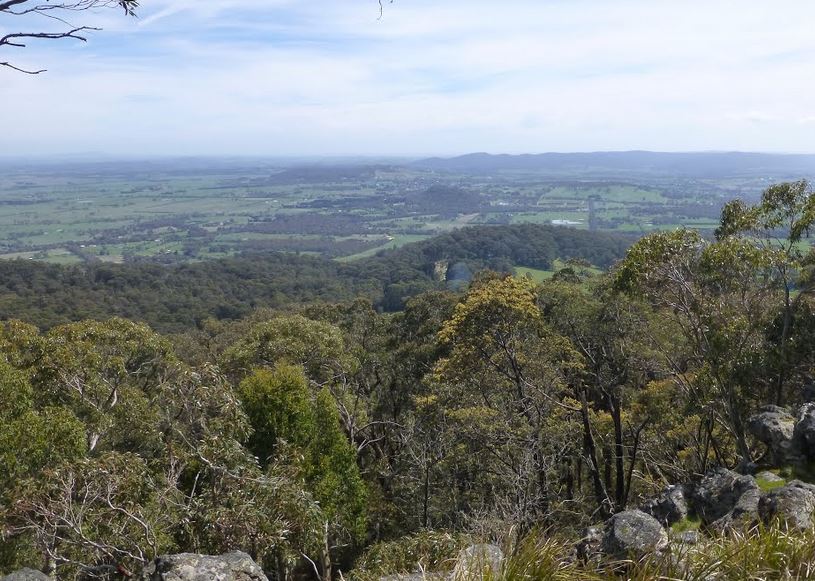
Mount Macedon climbs, ranked.

So this is a pretty obscure one, the potential audience for this is about 20 people, but i think about it a lot, so I’ve decided to rank my local climbs.

So this is a pretty obscure one, the potential audience for this is about 20 people, but i think about it a lot, so I’ve decided to rank my local climbs.

I like to trail run and I live on Mount Macedon. Trail Runners focus a lot on vertical gain and the mere mention of certain climbs can illicit an emotional response. Think Tour de France stages, Crossfit WODs or bad Tequila, some people get dizzy just thinking about them.

10) Hells Hole Track

530m / 12.7% / 68m gain

Not the longest, not the steepest and if you are there you are probably on a much longer run. Still, not without its charm.

https://www.strava.com/segments/11239900

9) Pine Plantation

780m / 23.1% / 110m gain

Kinda Meh now that they cut down all the trees. Also, not really a run, so much as a wall that you need to crawl up, especially if it is wet. Used to be fun when you could run up the mountain bike tracks, but I’m not sure they are there anymore

https://www.strava.com/segments/1342575

8) Chute Track

2.47km / 11.8% / 293m gain

https://www.strava.com/segments/10808961

Another one that runs steeper than the numbers, mainly because there are some very steep downs thrown in the middle – more like a roller coaster than trail run. Also feels very ‘Australian bush logging track’ – and if that’s your jam there are better places to do it than Mount Macedon. Does contain the aptly named Red Rage which basically looks like a giant red clay wall when you approach it. Also gets its share of burnt out cars, busted 4WD parts and empty bottles so there is that to enjoy.

https://www.strava.com/segments/10808961

7) Alton Road

2km / 10.5% / 218m gain

Not really ‘trail’ as its a proper road, but if you are after a long hard climb that you can (almost) run up this is worth a look. leads to some nice trails but my sense is that most people choose to go up the Goat to Hoods track.

https://www.strava.com/segments/1732423

6) Camels Hump

300m / 11% / 50m gain

Controversial early inclusion as its the highest point with a great view, but in running terms it’s two short to be scary and you end up turning around and bolting back down anyway. This one is definitely for the descenders but watch out for ice-cream lickers as it gets its fair share of tourists

https://www.strava.com/segments/4210441

5) Link Track No 1 & 2

1.75km / 17.0% / 302m gain

Starts with a nasty little section call the talon, which I would have named ‘glass corkscrew’ as it’s impossible to get traction for 9 months of the year. Once you get past that, it a straight hike up. Its steep, but the surface is good so you can just motor this one out. The top section is actually nice, just as it starts getting awful the gate magically appears (sooner than you would expect) then you can walk around like a new-born foal on Baringo Road for 5 minutes until you get the feeling back in your legs.

https://www.strava.com/segments/23669407

4) Zig Zag

1.3km / 8.7% / 119m gain

This is a personal pick as it’s close to my house, I spend a lot of time on this going to/from other parts of the Mountain. It’s rare to find a climb that is so consistent in gradient and each of the Zigs are roughly the same length. Can usually run up this one, but always looks easier on the map than it feels. I’ve definitely looked at the length/gradient and thought ‘I’ll try for KOM on that one’ only to get chewed out by Zag 3.

https://www.strava.com/segments/7187651

3) The Beast

1.1km / 27% / 301m gain

Hardest climb on the mountain, don’t @ me. Just relentless. Goes straight up, with a tough surface. Equal parts rocky, rutted & slippery. Nothing good to say about this. Only for the days when you are feeling masochistic.

Plenty of false dawns when you get near the top.

https://www.strava.com/segments/9344786

2) Mount Towrong

0.96km / 17.9% / 222m gain

Not as difficult as the beast, but forget about running this one if you are a mere mortal. Switchbacks,stairs, amazing views and super technical rocky sections put this one at number 2.

https://www.strava.com/segments/2786101

1) The Goat.

1.78km / 18.6% / 357m gain

I’m not sure if the name suggests this is a goat track or the G.O.A.T (Greatest of all time). It’s really neither, but it is the premier climb in the area. I wrote a whole post on this one Here.

https://www.strava.com/segments/3741525

The Goat

I’m not sure if the name suggests this is a goat track or the G.O.A.T (Greatest of all time)? Either way, unless your last name is Jornet it will turn you into a puddle

I’m not sure if the name suggests this is a goat track or the G.O.A.T (Greatest of all time)? It’s really neither, as your average Oreamnos would motor up it and in trail running terms it isn’t the Alps, but unless your last name is Jornet it will likely reduce to a huffing plod with-in 200m.

1.8km @ 18% Gradient are the stats, but the surface, twistiness and micro-climate make this one play longer than the numbers suggest.

https://www.strava.com/segments/3741525

This climb always reminds me of the Mike Tyson quote ‘Everyone has a plan until they get punched in the face’. Every time I have a plan for this one, I end up abandoning it somewhere in the first third and start repeating to myself ‘just survive’.

If you are visiting the Macedon Ranges and like a trail run or hike, this should be your starting point. On weekends this thing is Bourke St. which actually doesn’t matter too much because you won’t be moving that fast anyway. If you look really determined, most people will get out of your way and just stare at you in awe. Once I was running up the Goat and came upon a large family coming down. The smallest boy had a full size chicken sitting on his arm.